Stop Using So Much Laundry Detergent

If you’ve ever reached into your dryer expecting to pull out a load of downy-soft laundry only to find a pile of stiff, starchy garments, there’s a good chance you’re using too much laundry detergent.
Obviously, laundry detergent gets dirt and stains out of your clothes. But if you use too much, you wind up creating a new mess. This is a result of detergent residue that doesn’t fully rinse out, and it can turn your previously soft wardrobe into a crunchy, scratchy, uncomfortable-to-wear load of clothes.
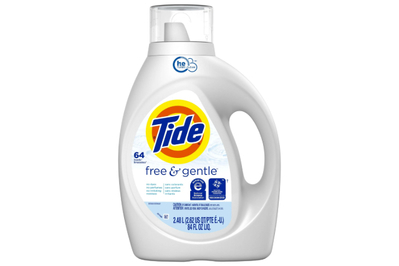
This perfume- and dye-free liquid was the most well-rounded liquid detergent we tested, tackling a variety of stains and odors well.
Too much detergent also creates a surplus of suds, which can prevent your garments from rubbing against one another (which helps release trapped dirt from your clothes), according to Tide’s website.
Though it seems counterintuitive, the more detergent you use past a certain point, the dirtier your clothes become.
How much laundry detergent should you actually use?
To effectively clean your clothes, you need to use only 2 tablespoons per load at most — and that’s for big loads weighing 12 pounds or more. In our guide to the best washing machines, we note that 1 tablespoon is enough to thoroughly clean an average load, which usually weighs around 8 pounds.
The amount of detergent you should add varies greatly among brands. The back of your bottle might even recommend that you use more than 2 tablespoons per load. But that doesn’t mean you should listen. “Most people aren’t washing truly dirty clothes, and the instructions are written as if they are,” says Wirecutter writer and laundry expert Andrea Barnes.
The effects can be even worse if you’re using high-efficiency (HE) detergent, which is made from high-concentration, low-sudsing formulas and can be used in both traditional and HE machines. In our guide, we explain that HE detergents are at least double the concentration of traditional detergents. On top of that, to clean your clothes, a high-efficiency washer uses a smaller amount of water than a traditional washing machine, so there’s even less water to dilute the detergent.
If you’re hand-washing, Andrea suggests starting with as little as half a teaspoon. You can rely on regular liquid laundry detergent, except if you’re washing delicate silk or wool by hand. She says in that case “you may want to consider one of our no-rinse detergent picks instead.”
Regardless, Andrea warns that you should wear gloves to protect your hands from harsh chemicals.
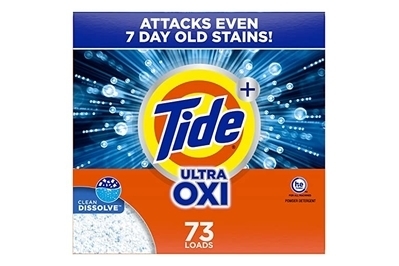
This powerful powder dissolves swiftly and completely, eliminates many tough stains, and leaves a light scent. But it’s less effective on greasy stains than our liquid picks.
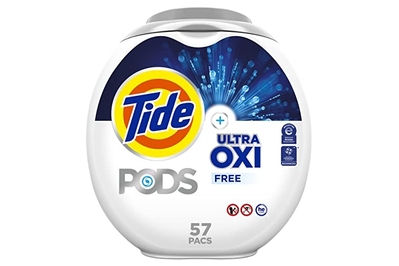
These pods are convenient, strong cleaners, and they contain no added perfumes or dyes. But you cannot pretreat stains with them, and they contain petroleum-based polyvinyl alcohol (PVA/PVOH).
Wirecutter now recommends powder and pod detergents in addition to liquid detergent — a departure from our longtime stance of recommending only liquid detergents. Be advised that while pre-portioned pods are convenient, you have less control over the amount of detergent used on your load. This can quickly lead to a buildup of the chemicals and cleaning agents that stiffen your laundry.
For powder detergent, Andrea recommends starting with 1 tablespoon for a small load and then adjusting as necessary for especially dirty or stained clothes. And for pods, you should only ever use one pod at a time, regardless of what the instructions say. We named Tide Pods Ultra Oxi Free our pod-detergent pick because it’s a strong cleaner, but also because it’s a smaller pod than most others we tested.
The best way to remove detergent buildup
Our experts don’t recommend laundry stripping (which involves soaking clothes in a mix of borax and washing soda, among other things), even though it’s popular on social media.
“If your clothing feels grimy, it might be tempting to laundry strip,” Andrea says. “Before you resort to this messy and laborious activity that may or may not improve the state of your clothes, you could try adding a laundry rinse.”
A laundry rinse is an acidic rinse, designed to rinse away buildups of detergent, which are alkaline. We don’t have an official pick yet, but we are in the middle of testing a variety of them. Vinegar could work for this purpose too, but in that case Andrea recommends adding an extra rinse to your cycle selections to rinse out the smell.
To prevent buildup from happening in the first place, Andrea suggests periodically cleaning your washing machine. She recommends using a citric-acid-based cleaner like Affresh. Andrea says it will “combat alkaline-detergent residue and keep your machine running and cleaning well, and leave your fabrics feeling fresher.”
Gabriella DePinho contributed reporting.
from Wirecutter: Reviews for the Real World https://ift.tt/QhqKoO4
via IFTTT


Comments
Post a Comment